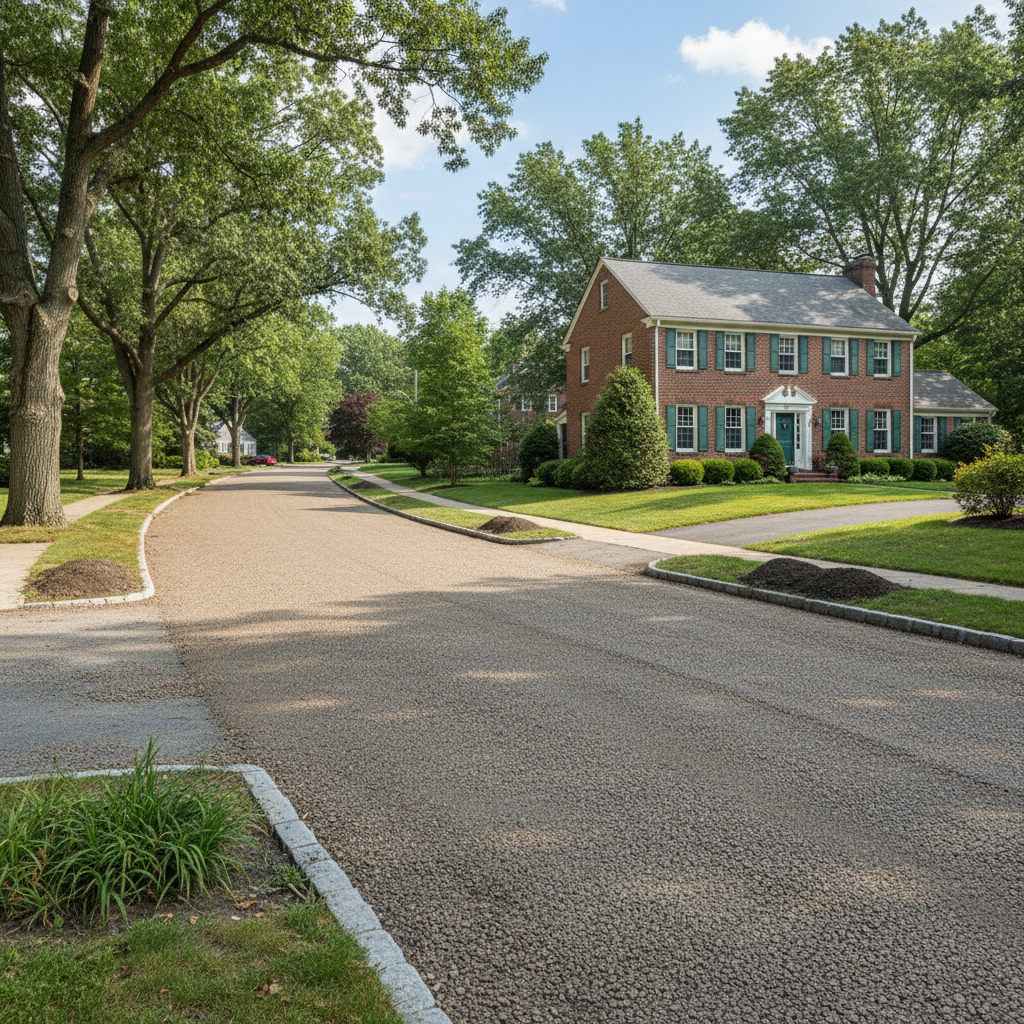
Got an asphalt surface that's seen better days? Maybe it's your parking lot, a private road, or even a really long driveway. You're probably thinking about repaving, and that's a good idea. But before you just slap a new layer down, let's talk about asphalt milling. It's a crucial step that often gets overlooked, and for Boston properties, it's usually the right call.
What Exactly Is Asphalt Milling?
Alright, so what are we even talking about here? Asphalt milling, sometimes called cold planing or asphalt removal, is basically grinding off the top layer of an existing asphalt surface. We use specialized machines with a big rotating drum covered in cutting teeth. It shaves off a precise amount of asphalt – anywhere from an inch or two to the full depth of the pavement, if needed. Think of it like a giant, super-accurate planer for your driveway or parking lot.
Why not just pave over the old stuff? Good question. You could, but it often leads to problems down the road. Paving directly on top of a failing surface just transfers those issues to the new layer. You'll see cracks reappear, or the new pavement won't last as long. Milling gets rid of the damaged, oxidized, and uneven top layer, giving us a fresh, stable base to work with. It's like prepping a wall before you paint it – you wouldn't just paint over peeling old paint, right? Same principle.
Why Milling Makes Sense for Boston Properties
This isn't just some fancy technique; it's practically essential for us here in Boston. Our climate is brutal on asphalt. We get those freezing winters, the thaws, the heavy rains, and then the hot, humid summers. That constant expansion and contraction, plus the freeze-thaw cycles, really beat up pavement. You see it everywhere – potholes, alligator cracking, rutting. Milling addresses these issues head-on.
Another big reason is elevation and drainage. Boston's a city built on hills and reclaimed land, and we deal with a lot of water. If you just add new asphalt on top of old, you raise the grade. That can mess with drainage, create trip hazards at transitions (like where your lot meets a sidewalk or curb), and cause headaches with door clearances. Milling allows us to maintain the existing grade or even adjust it for better water runoff. This is especially important in older neighborhoods like the North End or Beacon Hill, where every inch of elevation can impact historical buildings or tight property lines. We've done plenty of jobs where milling was the only way to ensure proper water flow away from foundations.
Plus, let's be honest, our streets and parking lots see a lot of traffic. Whether it's cars, delivery trucks, or just a busy commercial area, that constant weight takes its toll. Milling helps us create a stronger, more durable foundation for the new asphalt, meaning it'll stand up better to the daily grind.
Common Projects Where We Use Milling
You'll see milling used in a bunch of different scenarios around here:
- Parking Lots: This is a big one. Commercial parking lots, apartment complexes, retail centers – they all get heavy use and develop extensive cracking and rutting. Milling lets us remove the damaged surface and lay down a fresh, smooth, long-lasting lot without raising the overall height.
- Private Roads & Driveways: If you've got a long, private road or a really extensive driveway, especially one that's been patched repeatedly, milling is a smart investment. It creates a uniform surface for the new pavement.
- Road Resurfacing: Municipalities use milling all the time before repaving city streets. It’s how they keep the roads smooth and level without constantly raising the street level relative to sidewalks and manholes.
- Correcting Drainage Issues: Got standing water problems? A strategic milling plan can help us re-establish proper slopes and ensure water drains away efficiently.
Why Local Expertise Matters
You can't just hire any paving company for milling work, especially not in a place like Boston. You need a crew that understands the local conditions – the soil types, the weather patterns, the city's regulations, and even the quirks of older infrastructure. We know what kind of base material is common under older asphalt around here, and we know how to deal with the unexpected things you find once you start grinding away.
At Boston Paving Solutions, we've been doing this for years. We've got the right equipment, sure, but more importantly, we've got the experience to know exactly how deep to mill, how to handle transitions, and how to set up the site for the best possible outcome. We're not just taking off a layer of asphalt; we're setting the stage for a new surface that will last for years to come, despite what our New England weather throws at it. Don't cut corners on this step; it'll save you money and headaches in the long run.