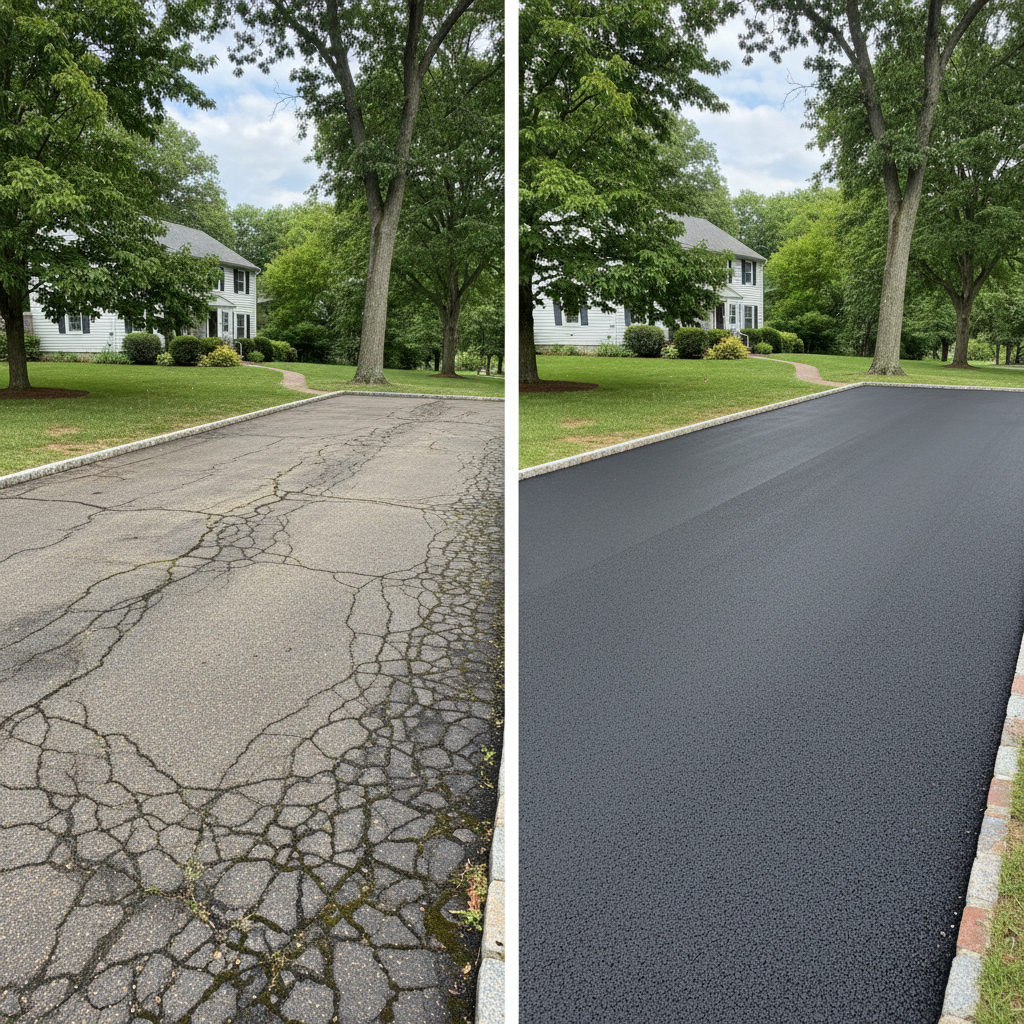
Your driveway takes a beating, especially here in Boston. Between the snowplows, the freeze-thaw cycles that crack everything up, and just plain old wear and tear, it's no wonder you're probably looking at some cracks or potholes. So, when it's time to do something about it, you've generally got two main paths: an asphalt overlay or a complete tear-out and new paving. Let's talk about what each one means for your wallet, how long it'll last, and what kind of maintenance you're signing up for.
The Asphalt Overlay: A Fresh Face for Your Driveway
An overlay, sometimes called resurfacing, is basically putting a brand new layer of asphalt right on top of your existing one. Think of it like putting a fresh coat of paint on a wall that's still structurally sound. We'll clean the surface, fill any major cracks or potholes, and then apply a new layer of hot asphalt, usually about 1.5 to 2 inches thick. It's a popular option for a reason.
Cost & Time
This is usually the big draw. An overlay is almost always less expensive than a full replacement. You're not paying for the labor and disposal of tearing out all that old material. It's also quicker to install. We can often get an overlay done in a day or two, depending on the size of your driveway.
Durability & Lifespan
Here's the catch: an overlay is only as good as what's underneath it. If your existing asphalt has deep, structural cracks, major drainage issues, or is crumbling in a lot of places, those problems are eventually going to telegraph through the new layer. We call that 'reflective cracking.' If the base is solid, though, a good overlay can give you another 8-15 years of solid performance. It's not going to last as long as a brand new driveway, but it's a significant extension.
Maintenance & Appearance
Maintenance is pretty standard: keep it clean, sealcoat every 2-3 years, and fix any small cracks as they appear. Appearance-wise, it'll look fantastic immediately – a smooth, black surface. But again, if the underlying issues are bad, those cracks will start to show up sooner rather than later.
Full Tear-Out & New Paving: Starting Fresh
This is the big one. With a full replacement, we're ripping out all the old asphalt, down to the sub-base. We'll inspect and often re-grade or reinforce that sub-base, which is crucial for drainage and stability, especially with the clay soils we often see around places like Dorchester or West Roxbury. Then we lay down a fresh, thick layer of new asphalt, usually 3-4 inches thick, sometimes more depending on traffic.
Cost & Time
This is the more expensive option, no two ways about it. You're paying for demolition, disposal, and more material. It also takes longer. We're talking several days, sometimes a bit more, depending on the scope of work and weather.
Durability & Lifespan
This is where new paving shines. Because you're addressing any and all issues from the ground up, a properly installed new driveway can last 20-30 years, sometimes even longer, with good maintenance. You're getting a completely new, robust structure designed to handle our tough New England weather.
Maintenance & Appearance
Maintenance is similar to an overlay – sealcoating, crack filling. But because the foundation is brand new and stable, you'll likely have fewer issues popping up for a longer time. Appearance is top-notch, a perfectly smooth, consistent surface that adds serious curb appeal and value to your home.
Which One Should You Choose? My Recommendation.
Alright, so how do you decide? Here's how I look at it:
- Go for an overlay if: Your existing driveway has mostly surface cracks, minor potholes, and a solid, stable base underneath. If it's just looking tired and worn, but isn't falling apart, an overlay is a smart, cost-effective solution to give it a fresh look and several more years of life.
- Go for a full replacement if: Your driveway has major structural cracks, alligator cracking (looks like alligator skin), significant potholes that keep coming back, drainage problems, or if it's over 20 years old and just completely worn out. If you're planning on staying in your home for a long time, or if you want the absolute best, most durable solution, new paving is the way to go.
Ultimately, it comes down to the condition of your existing driveway and your budget. We always start with a thorough inspection to figure out what's really going on beneath the surface. Sometimes, what looks like a simple fix needs a deeper solution. We'll give you an honest assessment and a clear quote for both options, so you can make the best decision for your home. Give Boston Paving Solutions a call, and we can come take a look at your place and talk through what makes the most sense.