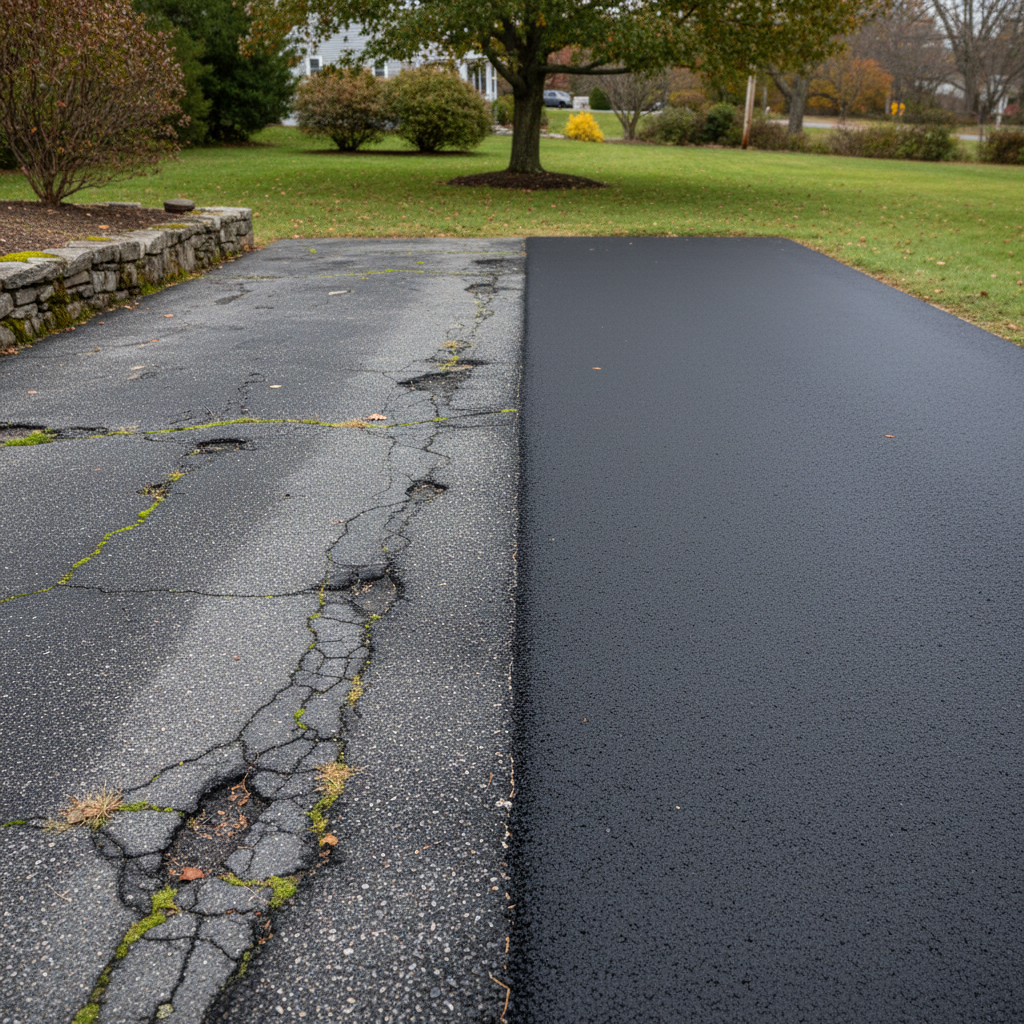
Alright, let's talk commercial asphalt. If you've got a parking lot, a private road, or even just a really long driveway that sees a lot of traffic, you're eventually going to face a choice: do you go with an asphalt overlay, or do you rip it all out and do a full-depth replacement?
It's a big decision, and it's not just about the upfront cost. What works for a sunny, dry climate isn't always the best bet when you're dealing with Boston's freeze-thaw cycles and heavy snow loads. I've seen plenty of jobs where folks tried to cheap out, and it ended up costing them more in the long run. Let's get into it.
What's an Asphalt Overlay?
Think of an overlay as a fresh coat of paint, but for your pavement. We're talking about putting a new layer of asphalt – usually 1.5 to 2 inches thick – right on top of your existing, but still structurally sound, pavement. Before we do that, we'll fix any major cracks, potholes, or areas that have really started to sink. This preparation is key; you can't just pave over big problems and expect them to disappear. We'll often mill (grind down) the top inch or two of the old pavement first, especially around drains or where the new pavement meets existing structures, to keep the elevation right.
Pros of an Overlay:
- Lower Upfront Cost: This is usually the big draw. You're using less material and there's less labor involved in excavation, so it's cheaper initially.
- Faster Installation: We can get in and out quicker. Less disruption for your business or property.
- Good for Minor Issues: If your pavement has surface cracks, fading, or just looks tired, an overlay can make it look brand new.
Cons of an Overlay:
- Shorter Lifespan: You're typically looking at 8-15 years, depending on traffic and maintenance. It's only as good as what's underneath it.
- Doesn't Fix Structural Problems: If your base layer is shot, an overlay is just putting a band-aid on a broken leg. Those underlying issues will eventually telegraph through the new surface.
- Limited Number of Overlays: You can only do this so many times before your pavement gets too high, causing drainage issues or problems with curbs and building entrances.
What's a Full-Depth Replacement?
This is the big one. A full-depth replacement means exactly what it sounds like: we rip out all the old asphalt, sometimes even excavating the base material if it's compromised. Then, we re-establish a solid, properly graded sub-base, lay down a new aggregate base, and finally, put down brand new layers of asphalt. It's a complete rebuild from the ground up.
Pros of a Full-Depth Replacement:
- Maximum Durability and Lifespan: When done right, you're looking at 20-30 years, sometimes more. This is the most robust solution.
- Addresses All Issues: We fix everything from poor drainage to a failing sub-base. You get a truly fresh start.
- Better for Heavy Traffic: If your lot sees a lot of trucks, delivery vehicles, or just constant heavy use, this is the way to go.
Cons of a Full-Depth Replacement:
- Higher Upfront Cost: This is no surprise. More material, more excavation, more labor. It's a bigger investment.
- Longer Installation Time: More work means more time. This can mean more disruption for your business.
- More Waste: There's more old material to haul away and dispose of.
Which One Should You Choose for Boston?
This is where the rubber meets the road, especially here in Massachusetts. Our winters are brutal. The constant freezing and thawing, combined with heavy plowing and salt, puts a huge strain on pavement. Water is the enemy of asphalt, and if it gets into your sub-base and freezes, it'll heave and crack your pavement faster than anything.
Here's my honest take:
- Go with an Overlay IF: Your existing pavement is mostly in good shape, but showing its age. You have minor cracking, some fading, and good drainage. You're looking for a cost-effective way to refresh the look and extend the life for another decade or so. We've done plenty of successful overlays for properties in places like the Seaport District where the underlying structure is relatively new and well-maintained.
- Go with a Full-Depth Replacement IF: You're seeing significant potholes, widespread alligator cracking (that looks like alligator skin), areas that are constantly sinking, or standing water after a rain. These are all signs that your sub-base is failing. If you've already had one or two overlays and the problems are coming back quickly, it's time for a full replacement. This is especially true for commercial properties in older industrial areas where the original pavement might be decades old and the ground underneath has settled unevenly over time.
Look, I get it. Nobody wants to spend more than they have to. But with commercial asphalt, trying to save a buck upfront often leads to bigger headaches and costs down the road. If your pavement is truly failing, an overlay is just kicking the can down the street. You'll be back here in a few years, spending money again.
My recommendation, especially for commercial properties in Boston that see a lot of wear and tear, is to lean towards a full-depth replacement if there are any serious structural issues. It's a bigger investment initially, but it pays off in durability, less maintenance, and peace of mind for decades. You'll avoid those constant repair calls, and your property will look sharp and professional for much longer.
When you're ready to figure out the best approach for your specific property, give us a call at Boston Paving Solutions. We'll come out, take a look, and give you an honest assessment of what you really need.