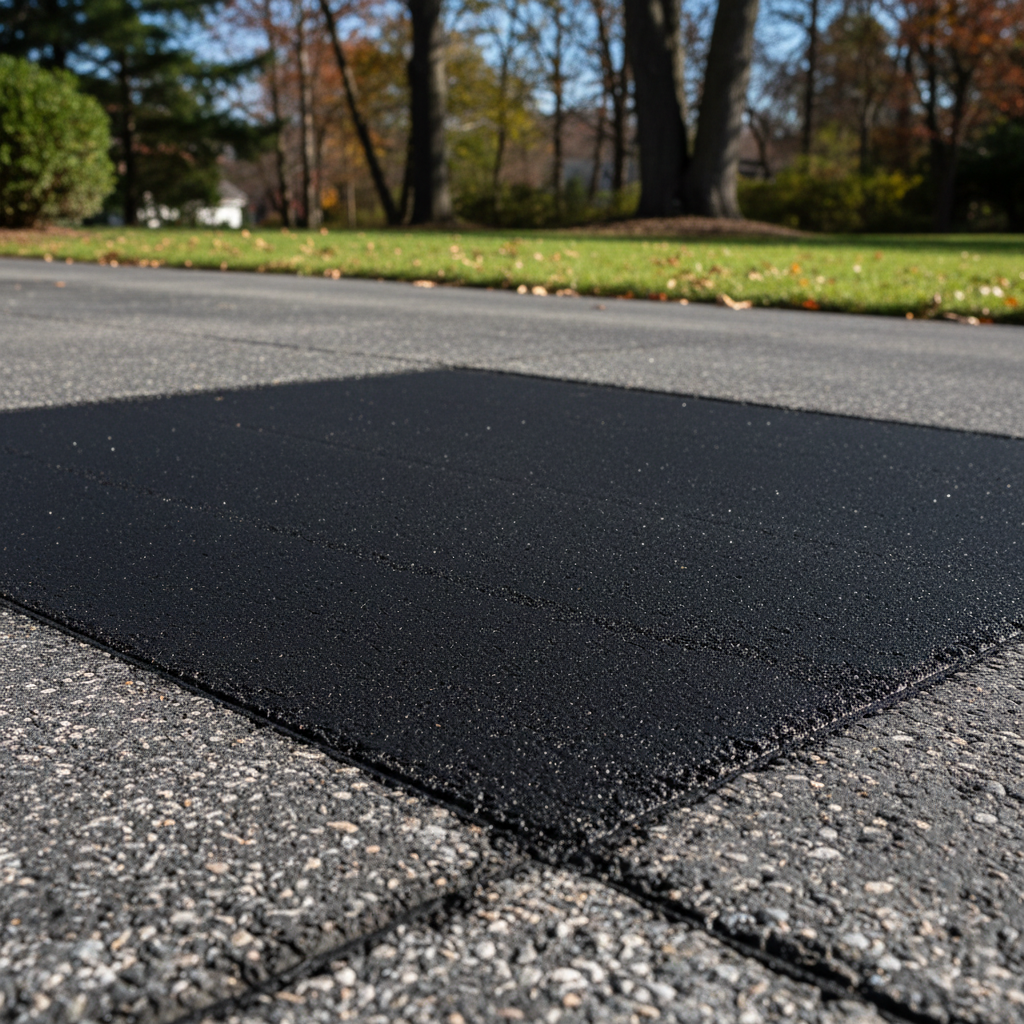
So, you've got a crack or a pothole staring back at you from your asphalt driveway. Happens to the best of us, especially with Boston's wild weather. One day it's freezing, the next it's thawing, and that freeze-thaw cycle is brutal on pavement. You're probably wondering, "Can I just fix this myself, or do I need to call someone?" Let's break it down.
What You Can DIY: Small Cracks and Minor Potholes
For small, isolated cracks (think less than a half-inch wide) or shallow potholes that aren't too big (say, smaller than a dinner plate and not super deep), you can absolutely give DIY patching a shot. This is about preventing bigger problems, not fixing a completely ruined driveway. Think of it like putting a band-aid on a cut before it gets infected, right?
Before You Start
Clean it out: This is crucial. Get all the loose debris, dirt, and gravel out of the crack or pothole. A stiff brush, a screwdriver, or even a leaf blower works well. You want a clean, dry surface for your patch material to stick to. If there's any vegetation growing, pull it out by the roots.
Check the weather: Don't try to patch in the rain or when it's about to freeze. The patch material needs to cure properly, and moisture is its enemy. Aim for a dry day, ideally when temperatures are above 50°F (10°C). Our spring and fall are usually good for this, but sometimes even a nice summer day can work.
Choose your material: For homeowners, cold patch asphalt is your go-to. You can find it at any hardware store. It comes in bags or buckets and is designed for easy, no-heat application. It's not as durable as hot mix asphalt, but it's perfect for temporary fixes or small repairs.
The Patching Process
Fill the void: For cracks, pour the cold patch directly into the crack. For potholes, shovel it in. Make sure you overfill it slightly, creating a small mound above the surrounding pavement. The material will compact.
Compact it: This is the most important step for durability. You need to tamp the material down firmly. For small patches, you can use a hand tamper, the back of a shovel, or even drive your car over it a few times (slowly!). The goal is to get it as dense and level as possible with the existing driveway.
Level it off: Once compacted, the patch should be flush or slightly proud of the surrounding asphalt. If it's too high, you can try to scrape some off or compact it more. If it's too low, add a bit more material and re-compact.
That's it for the immediate fix. It's not a permanent solution like a professional hot mix repair, but it'll stop water from getting under your driveway and making things worse.
When to Call a Pro: Bigger Problems, Lasting Solutions
Now, let's talk about when DIY just isn't going to cut it. If you're seeing any of these issues, you need to pick up the phone and call a paving contractor like us at Boston Paving Solutions:
Large, deep potholes: If a pothole is bigger than a dinner plate, deeper than a few inches, or has crumbling edges, cold patch won't hold up. You need proper excavation, a good base, and hot mix asphalt applied with professional equipment. Trying to fix these yourself is a waste of time and money.
Extensive cracking (alligator cracking): This looks like a series of interconnected cracks, resembling alligator skin. It means the underlying base is failing, and the surface asphalt is structurally compromised. Patching individual cracks here is like putting a band-aid on a broken leg. You need a more comprehensive solution, possibly an overlay or even a full-depth replacement.
Edge deterioration: If the edges of your driveway are crumbling, cracking, or breaking off, it usually points to a lack of proper support or drainage. This isn't a surface fix.
Heaving or sinking sections: If parts of your driveway are noticeably higher or lower than others, it's a sign of serious base issues, poor drainage, or even tree roots. This requires excavation and rebuilding, not just patching.
Multiple, widespread repairs: If you're looking at patching a dozen different spots, it's a good indication that your driveway is past its prime and needs more than just spot treatments. At a certain point, the cost and effort of constant patching outweigh the benefits of a proper repair or replacement.
We see a lot of driveways in neighborhoods like Dorchester and West Roxbury that have taken a beating over the years. Sometimes a quick patch is all it needs to get you through another season, but often, especially with older driveways, it's just a temporary measure.
After the Patch: Maintenance Matters
Once you've done your patching, or had a professional repair, don't forget about ongoing maintenance. A good sealcoat every few years can protect your asphalt from UV rays, water penetration, and those brutal freeze-thaw cycles we get here. It'll also make those small patches blend in better and extend the life of your entire driveway.
The bottom line is, don't be afraid to tackle small repairs yourself. It's a great way to save a few bucks and keep your driveway looking decent. But know your limits. When the damage gets beyond a simple fill-and-tamp job, that's when you call in the experts. We're always here at Boston Paving Solutions to give you an honest assessment and a solid plan for your driveway, whether it's a small repair or a full overhaul.