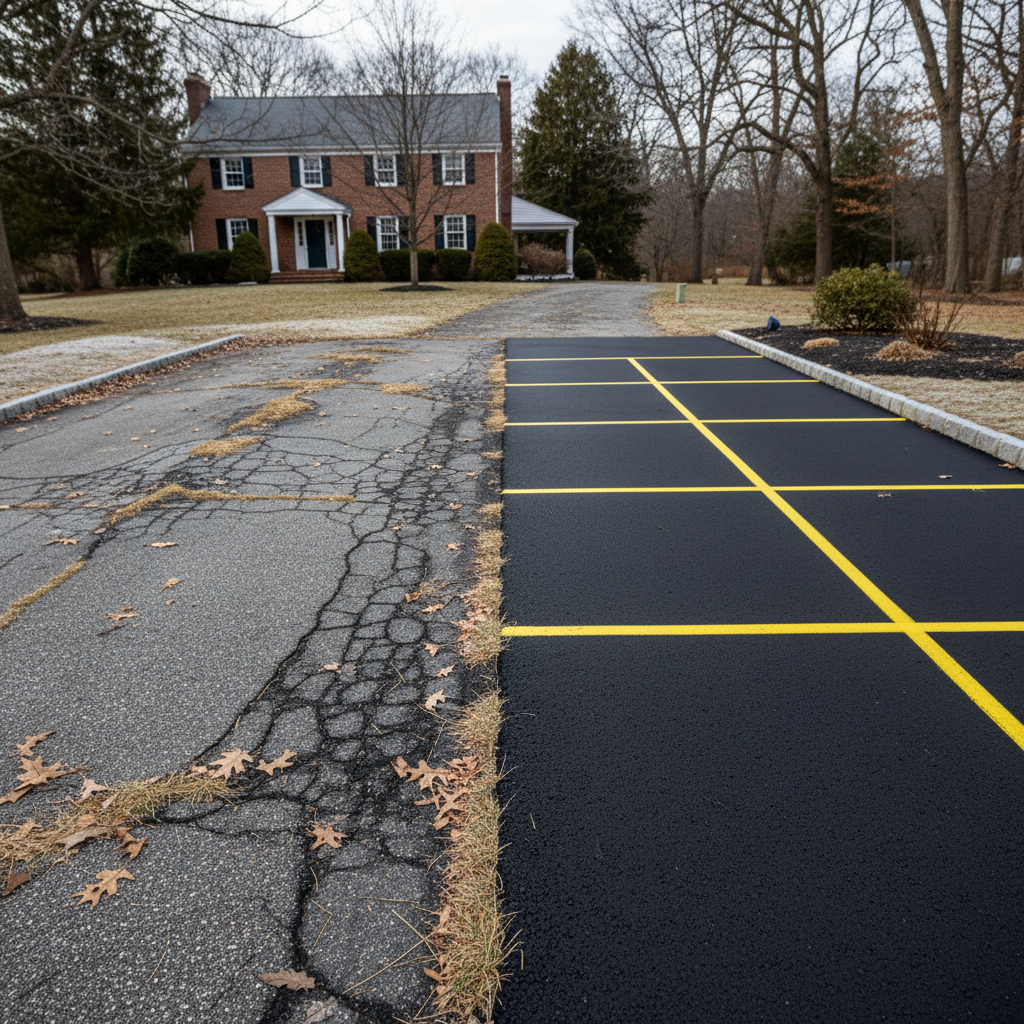
Alright, let's talk lines. Maybe you've just had a new asphalt driveway put down, or maybe you're looking to spruce up an existing one. Either way, chances are you're thinking about striping. Could be parking spots, a basketball court, or just a clear edge for your property. When it comes to marking asphalt, you've essentially got two main options: traditional traffic paint or thermoplastic. So, which one's right for your place here in Boston? Let's break it down, shall we?
Traffic Paint: The Familiar Choice
This is probably what most folks picture when they think about lines on asphalt. It's liquid paint, usually acrylic, and we apply it with a sprayer. It's pretty straightforward, and it's been around forever for a good reason.
- Cost: This is where paint really shines, especially upfront. It's significantly cheaper per linear foot to put down than thermoplastic. For a residential driveway or a small parking area, the material cost and the time it takes to apply are much lower. If your budget is tight, paint is usually the way to go.
- Durability: Here's the trade-off, though. Paint just doesn't last as long, especially with our New England weather. We get harsh winters, snow plows scraping, road salt, and then hot, humid summers. All that really takes a toll. You're probably looking at needing to repaint every 1-3 years, depending on traffic and how exposed the lines are. If your driveway gets a lot of sun and heavy vehicle use, that 1-year mark might be more realistic, to be honest.
- Maintenance: Not much maintenance beyond just reapplying it when it starts to fade. You *could* clean it, but honestly, by the time it needs cleaning, it's probably fading anyway.
- Appearance: When it's fresh, it looks great – crisp, bright lines. But it dulls over time, and it can chip or peel, especially in high-wear areas or where snow shovels do their work. It's a flat finish; no real texture to it.
Thermoplastic Markings: The Heavy-Duty Option
You see thermoplastic on major roads, highways, and commercial parking lots all over the place. It's not paint; it's a plastic-based material that we heat to a molten state and then apply to the asphalt. It cools and hardens, forming a really durable bond.
- Cost: This is the big one. Thermoplastic is considerably more expensive upfront than paint. The material itself costs more, and applying it requires specialized equipment and trained crews. It's definitely a bigger investment.
- Durability: This is where thermoplastic absolutely crushes paint. It's built to withstand heavy traffic, abrasive conditions, and extreme weather. It won't chip or peel like paint does. You're looking at 5-8 years, maybe even longer, before it needs any attention. Think about the lines on the Mass Pike – that's thermoplastic, and it holds up to thousands of cars daily and brutal winters.
- Maintenance: Very low maintenance. This stuff is tough. You won't be reapplying it nearly as often, which saves you time and hassle in the long run.
- Appearance: Thermoplastic lines are thicker and often have a slightly raised, textured feel. They look very professional and substantial. They hold their color much longer than paint, staying bright and visible for years. Some even incorporate reflective beads for better nighttime visibility, which is a nice safety feature for darker driveways, right?
So, What's My Recommendation for Boston Homeowners?
Look, for most residential driveways, especially if it's just a couple of lines to define a parking spot or a basketball court, traditional traffic paint is often enough. The lower upfront cost is a big factor, and while you'll reapply it more often, it's not a huge job for a small area. We do plenty of residential striping with paint at Boston Paving Solutions, and our clients are happy with it.
However, if you have a larger private parking area – maybe for a multi-family home in Southie, or a small business with customer parking – and you want something that truly lasts and looks sharp for years without constant touch-ups, then thermoplastic is worth the extra investment. Think about the labor and disruption of repainting every couple of years versus a single, more durable application. Over time, the cost difference narrows when you factor in longevity.
Another scenario where thermoplastic makes sense is if you're dealing with a steep driveway or an area that gets a lot of direct sun and heavy foot/vehicle traffic. The added resilience of thermoplastic will definitely pay off there. For instance, if you've got a busy residential complex or a shared driveway that sees a lot of action, you'll be glad you went with the tougher option.
Ultimately, it comes down to your budget and how long you want those lines to last without thinking about them again. Give us a call, and we can look at your specific situation and give you an honest quote for both options. We'll help you figure out what makes the most sense for your asphalt.