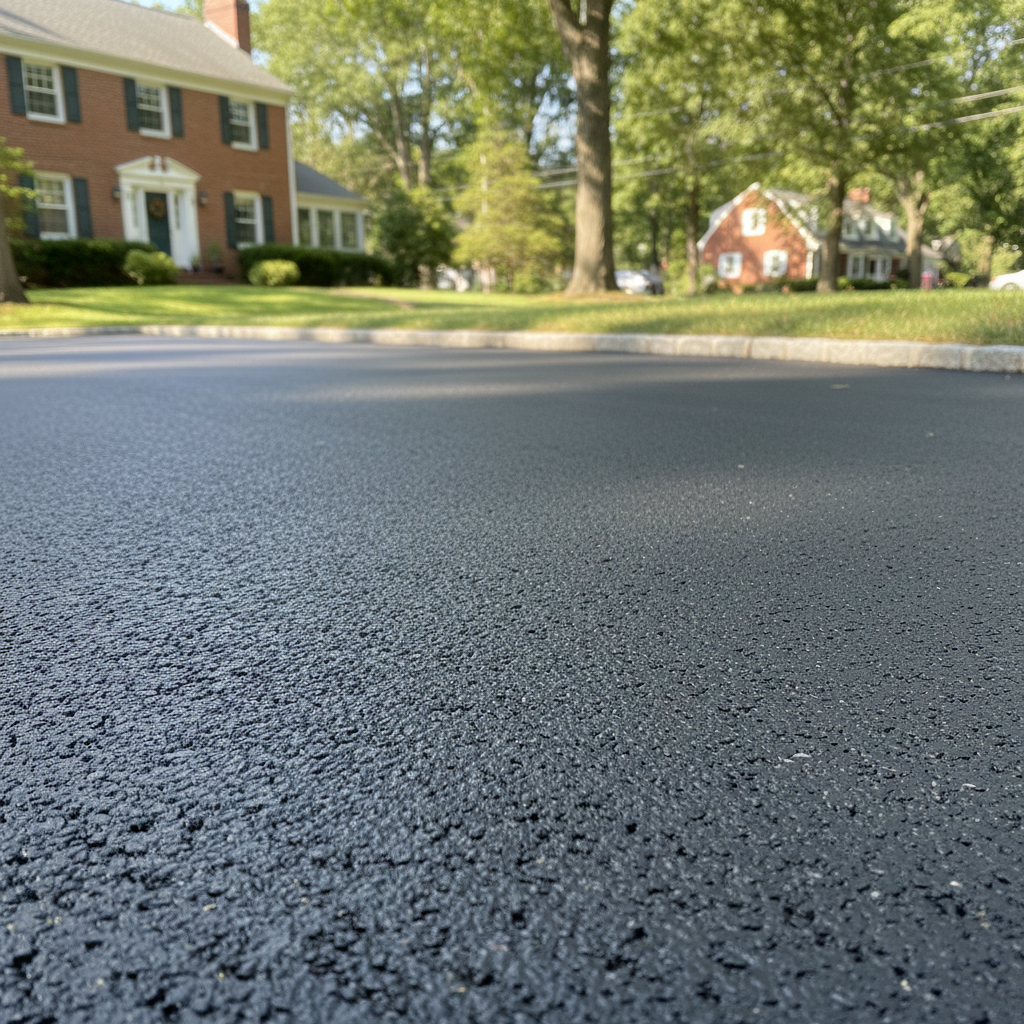
Got an asphalt driveway, or thinking about getting one? You probably have a bunch of questions. Believe me, I hear 'em all the time when I'm out on jobs, whether it's around Dorchester or down by the Seaport. Folks want to know what's really going on with their pavement, and they deserve straight answers, not some marketing fluff. So, let's just dive right into the common questions I get asked about residential asphalt.
Why does my asphalt driveway crack, and what can I do about it?
Cracks are probably the most common complaint I hear, and it's no mystery why they pop up. Asphalt isn't concrete; it's flexible, sure, but it's not indestructible. The biggest troublemaker around here? Our wild New England weather. We swing from freezing cold winters, complete with snow and ice, to thaws, then straight into baking hot summers. That constant expansion and contraction really puts a ton of stress on the pavement.
Water, for instance, sneaks into tiny hairline cracks, freezes, expands, and then — boom — you've got a bigger crack. Heavy vehicles, a poorly prepared base when the driveway was first put in, or just plain old age also play a part. What's a homeowner to do?
Catch 'em early. Small cracks, especially those under a quarter-inch wide, can often be sealed. This stops water from getting in and making things worse, which is key. Now, if you're seeing "alligator cracking"—that pattern that looks like alligator skin—you're usually dealing with a more serious issue deeper down, maybe with the base. Sealing won't cut it for long then. That's when you might need to think about patching or even replacing that whole section. Don't drag your feet on this, because a little crack can quickly turn into a big, expensive headache.
How long should a new asphalt driveway last in Boston?
That's a good question, and the honest answer is: it depends. A properly installed asphalt driveway, meaning one with a solid base and good drainage, should stick around for anywhere from 15 to 25 years in our area. I've certainly seen some last longer, and, unfortunately, I've seen some fail sooner. The main things that dictate its lifespan are the quality of the initial installation—did they prep the base right? Was the asphalt mix good?—and how well you keep it up. If you're sealing it every few years, fixing cracks fast, and not parking semi-trucks on it, you'll likely get closer to that 25-year mark. Ignore it, and you'll be lucky to hit 10 or 12 before you're looking at major repairs or a full replacement.
What's the deal with sealcoating? Do I really need it?
Yep, you really do. Think of sealcoating as sunscreen and a protective shield for your driveway. Asphalt contains petroleum products, and over time, the sun's UV rays and chemicals like oil and gas start to break down those binders. This makes the asphalt brittle, causes it to fade, and leaves it more prone to cracking. Sealcoating adds a fresh layer of protection on top, bringing back those binders, sealing up tiny surface pores, and giving your driveway that nice, dark, refreshed look.
I usually tell folks to sealcoat a new driveway about 6-12 months after it's installed; that gives it time to fully cure. After that, every 2-3 years is a pretty good schedule for most residential driveways. If your driveway gets a lot of sun or sees heavy traffic, you might want to do it a bit more often. It's a relatively cheap way to significantly extend your driveway's life.
My driveway has puddles after it rains. Is that normal?
Absolutely not. Puddles, or "ponding" as we call it, mean you've got a drainage problem. Water is asphalt's worst enemy. If water just sits on your driveway, it's going to seep into the surface, soften the base underneath, and speed up cracking and deterioration. This usually points to poor grading during the initial installation. The driveway should always have a slight slope to direct water away from your house and off the pavement.
Fixing this can be simple or quite complex. Sometimes, a small low spot can be patched and re-graded. Other times, if it's a widespread issue, you might need to consider milling down the existing asphalt and repaving with the correct slopes. It's something you definitely want to take care of, especially with our heavy rains and snowmelt cycles here in Boston. Don't let water sit; it'll just chew up your investment.
Can I put asphalt over my old concrete driveway?
You can, but it's not always the best solution, and it definitely comes with some strings attached. People often do this to save on demolition costs. If your concrete driveway is in pretty good shape—minimal cracking, no major heaving, and a stable base—then an asphalt overlay can work. We'd typically clean it thoroughly, fill any big cracks, and then lay down a new layer of asphalt. The concrete then acts as a very stable base, which is a plus.
However, any cracks or movement in the concrete below will eventually show through the new asphalt layer. We call it "reflective cracking." Also, you'll be raising the level of your driveway, which can cause headaches with garage door clearances, drainage, and how it transitions to sidewalks or lawns. It's really a case-by-case situation. I'd need to come out and take a look at your specific setup to tell you if it's a smart option for your home.
How do I choose a good paving contractor in Boston?
This is a big one, because a bad job will cost you more in the long run. First off, never just go with the cheapest bid. Ever. Quality materials and experienced workers just aren't cheap. Get at least three quotes, and make sure they're detailed. They should clearly state the asphalt thickness, the amount of base material, and exactly what kind of prep work they'll do. Ask for references, and actually call them! Drive by some of their recent jobs if you can. Look for contractors who have been around for a while in the area, not just some fly-by-nighters. Check if they're licensed and insured—that's non-negotiable, by the way. A good contractor, like us at Boston Paving Solutions, will be upfront, answer all your questions, and stand behind their work. If they're pushing you for a quick decision or asking for a huge upfront payment, that's a major red flag. Trust your gut on this one.
What's the best time of year to pave a driveway in Boston?
Hands down, spring and fall are the sweet spots for asphalt paving around here. The ideal temperature range for laying asphalt is usually between 50 and 80 degrees Fahrenheit. In the spring, after the ground has thawed and dried out, you get consistent temperatures that let the asphalt compact properly and cure evenly. Same goes for the fall, before the really cold weather hits. Paving in the middle of summer when it's scorching hot can be done, but the asphalt might cool too quickly or stay too soft, which affects its compaction and how long it lasts. Winter paving? Forget about it. The ground is frozen, and the asphalt cools way too fast, leading to a poor bond and a much shorter lifespan. So, if you're planning a new driveway, aim for those shoulder seasons.
What kind of maintenance should I be doing myself?
You can do a fair bit to keep your driveway in good shape between professional services. Keep it clean: sweep off dirt, leaves, and debris regularly. Don't let oil or gas spills sit; clean them up right away with an absorbent material and a mild detergent. Try not to park really heavy vehicles on it for long periods if it wasn't built for that kind of load. Don't use sharp objects like shovels with metal edges to scrape ice or snow, because you can easily gouge the surface. And as I mentioned, keep an eye out for small cracks and get them sealed quickly. A little proactive care really goes a long way in protecting your investment.
Got more questions?
I'm always happy to talk shop. If you're in the Boston area and have specific concerns about your driveway, give us a call at Boston Paving Solutions. We've been doing this a long time, and we know what works—and what definitely doesn't—for our local conditions.